
Manchester City's squad overhaul since their 2023 Treble win has been guided by a sophisticated data and scouting process that starts with a database of 650,000 footballers. Only four players from that historic campaign remain at the club, with signings like Elliot Anderson reflecting a strategy to sustain competitiveness through analytics. Sporting director Hugo Viana explained how the system works.
City's data department filters that vast global list down to a longlist of 20 to 50 names after receiving a recruitment brief. Players are graded on ability, characteristics, and how they fit their current team's system. This list is then cross-referenced with the club's traditional scouting network, with significant overlap between the two methods.
The case of Elliot Anderson
Elliot Anderson, now 23, made the initial cut from the database but was not a top candidate early on. His data readings improved dramatically as last season progressed, compelling City's scouts to watch him regularly for Nottingham Forest. Analysts noted his general metrics at Forest, a team that does not dominate possession like City, limited his opportunities in the final third. They projected he would have more options for shorter, successful passes at the Etihad.
Anderson's profile stood up favourably against City's existing midfielders and other potential signings. Key criteria on his radar chart included defensive regains, duel success, and line-breaking passes. Even when his price rose beyond City's initial valuation, the club felt the risk was low due to thorough work by the data team and scouts. "The data was positive for Elliot and gave us real confidence in his profile," Viana said. "But it was the insight from our scouts and wider performance team that helped us understand the player and his attributes."
Balancing numbers with insight
Viana stressed that data is just one part of the picture. "We know data cannot tell us everything about a player," he said. "It cannot fully show a person's character, mentality or behaviour." The final shortlist of two or three players undergoes deeper dives into injury records, athletic performance, and behavioural habits before a decision is made.
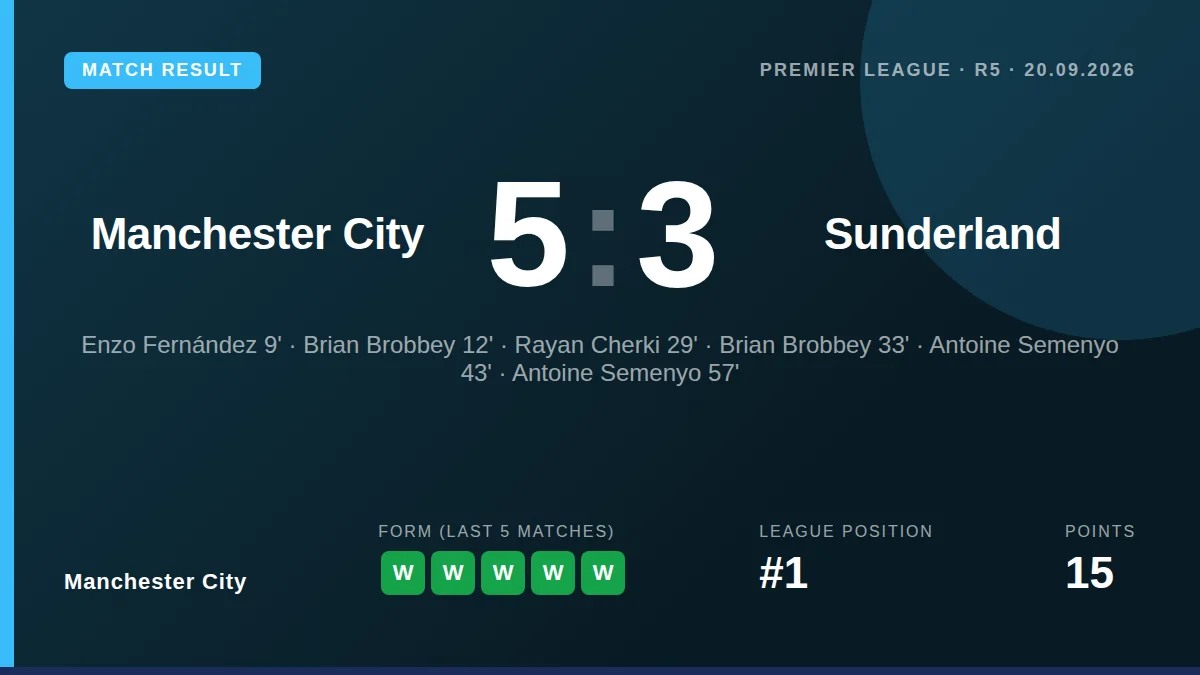
This process has contributed to a seamless transition on the pitch. The data-driven refresh of the squad has helped City maintain their relentless form, averaging 2.8 goals per game and conceding just 0.4 per game this season. This has propelled them to the top of the standings with 15 points from five wins, three points clear of Arsenal. The challenge now is to maintain that momentum, with a key trip to Anfield to face Liverpool next. The club's valuation model, which contributed heavily to signing Julian Alvarez for £14m before his eventual £81m sale, continues to identify value, ensuring the team remains at the summit of English football.
Further reading: BBC Sport Football